
Table of Contents
- Mobile Windscreen Repair: The Short Answer
- How Long Does Windscreen Replacement Take?
- Step 1: Vehicle Assessment and Preparation (10-15 minutes)
- Step 2: Windscreen Removal (15-20 minutes)
- Step 3: Frame Cleaning and Primer Application (10-15 minutes)
- Step 4: Adhesive Application and Glass Fitting (10 minutes)
- Step 5: Curing Time and Safety Check (30-60 minutes)
- Why This Process Matters for Reliability
- The Benefits of On-Site Windscreen Fitting
- Windscreen Repair Safety Standards Australia
- Limitations of Mobile Repair vs. a Workshop
- What to Look For in a Mobile Technician
- Is Mobile Windscreen Repair Worth It?
- Frequently Asked Questions
Last Updated: September 6, 2026
Mobile Windscreen Repair: The Short Answer
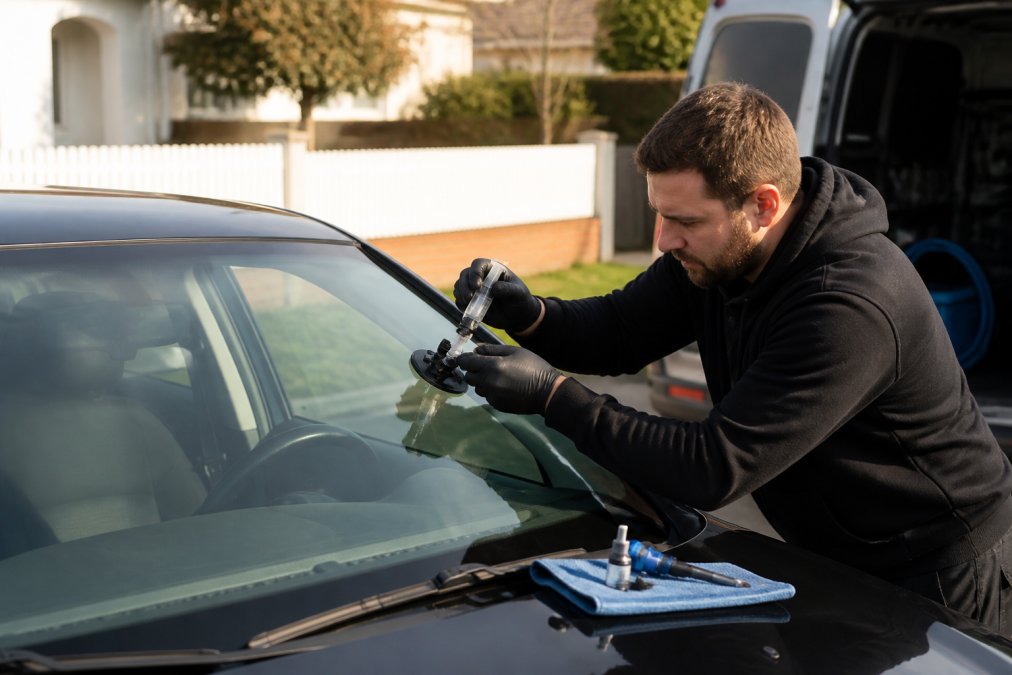
Yes, mobile windscreen repair is reliable when performed by a qualified technician using proper materials and following Australian safety standards. Mobile Auto Glass Melbourne offers convenient, same-day mobile windshield repair and replacement services directly to vehicle owners across Melbourne, ensuring quick and professional glass restoration right where you are.
Mobile windscreen repair refers to the logistics of where the work happens, not the quality of the work itself. A certified technician brings the same tools, glass, and adhesives to your location that they would use in a shop.
Reliability depends on several factors, including technician training, curing times, and whether your vehicle needs ADAS recalibration. This guide covers what to expect from a professional mobile service and how to tell a quality operation from one that cuts corners.
How Long Does Windscreen Replacement Take?
A standard windscreen replacement typically takes between 60 and 90 minutes from arrival to completion (agwa.com.au). Here is the step-by-step process a qualified mobile technician follows on-site.
Step 1: Vehicle Assessment and Preparation (10-15 minutes)
The technician begins by inspecting the damage and confirming the correct glass for your vehicle’s make, model, and year. They check the frame for rust or old adhesive that could compromise the new bond. The area around the windscreen is then masked off to protect your paintwork and trim from scratches during glass removal.
Step 2: Windscreen Removal (15-20 minutes)
Using a specialised cutting wire or cold knife, the technician separates the old glass from the frame. This is a delicate step: cutting too aggressively can damage the pinchweld, which is the metal lip that holds the windscreen. A skilled technician knows how much force to apply and uses the correct tools to avoid bending the frame. On vehicles with bonded trim or mouldings, these are carefully removed and set aside for reuse.
Step 3: Frame Cleaning and Primer Application (10-15 minutes)
Once the old glass is out, the exposed pinchweld is ground down to remove residual adhesive. The surface is then cleaned with a solvent to eliminate dust, oil, and moisture. A primer is applied to both the frame and the new glass. This primer is not optional, it creates the chemical bond between the urethane adhesive and the surfaces. Skipping this step is a common shortcut that leads to leaks or windscreen pop-out in a collision.
Step 4: Adhesive Application and Glass Fitting (10 minutes)
The technician applies a continuous bead of high-strength urethane adhesive to the frame. The bead thickness and pattern matter: Australian standards require a consistent layer to ensure full surface contact. The new windscreen is then lifted into place using suction cups, aligned precisely, and pressed firmly into the frame. The technician checks the gap around the edges to confirm an even fit before moving to the next step.
Step 5: Curing Time and Safety Check (30-60 minutes)
This is the step that most affects your total wait. The adhesive needs time to cure before the windscreen can provide structural support in a crash. While the glass is physically set within about 30 minutes, most urethane adhesives require a minimum of 60 minutes before the vehicle is safe to drive. Some adhesives cure faster in warm, dry conditions; cold or humid weather extends the time. A reliable technician will not rush this. They will also reattach any trim, wipers, or sensors during this period and perform a final visual inspection.
Why This Process Matters for Reliability
The reliability of mobile windscreen repair is not about whether the technician has a workshop roof over their head, it is about whether they follow each of these steps consistently. A professional mobile unit carries the same tools, primers, and adhesives as a fixed workshop. When you book a mobile service, ask the operator about their process.
If your technician does not tell you how long to wait before driving, ask directly. A vague answer is a red flag.
The Benefits of On-Site Windscreen Fitting
The primary benefit of on-site windscreen fitting is eliminating downtime from your day. Instead of driving to a workshop and waiting, a technician comes to your home, office, or wherever your vehicle is parked.
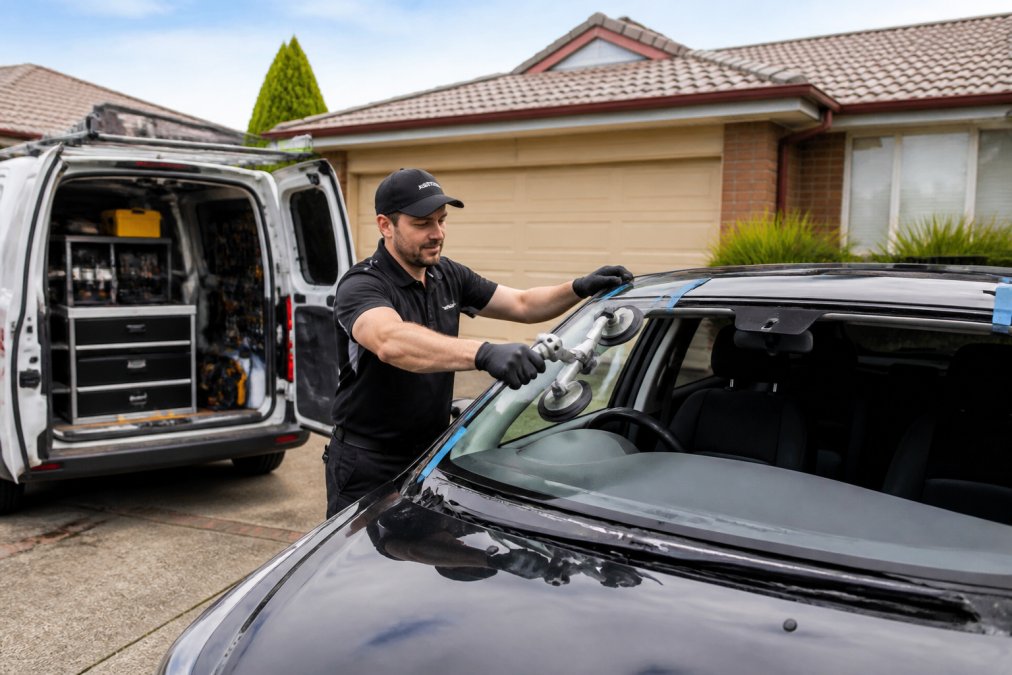
On-site fitting also means your vehicle stays put, with no risk of damage from an extra drive on compromised glass. For fleet managers, mobile service means multiple vehicles can be handled on location without taking drivers off the road.
Same-day service also addresses safety: waiting days for an appointment leaves you driving with compromised structural safety. A mobile unit that can reach you quickly handles both convenience and safety in one visit.
Windscreen Repair Safety Standards Australia
Windscreen repair and replacement in Australia is governed by strict safety standards, most notably the Australian Design Rules administered by the Department of Infrastructure. These rules mandate that a windscreen provides structural integrity and that replacement glass meets the same safety specifications as the original factory fit.
The windscreen contributes significantly to the vehicle’s structural rigidity, and in a rollover accident, it helps prevent the roof from collapsing. A qualified technician understands that the windscreen is a safety component, not just a visibility panel.
Reputable mobile services follow the same procedures as fixed workshops regarding surface preparation, primer application, and adhesive coverage. The Australian standard for windscreen bonding requires the adhesive to be applied at the correct thickness and the glass to be held firmly in place during the initial curing period. When you book a mobile service, ask whether the technician follows these procedures.
ADAS Recalibration: Why It Matters
Modern vehicles equipped with Advanced Driver Assistance Systems (ADAS) present a complication that many older guides overlook. If your windscreen houses a camera or sensor for features like lane departure warning or automatic emergency braking, replacing the glass can misalign these systems. ADAS recalibration is the process of realigning those sensors after the new windscreen is fitted.
Not every mobile technician can perform ADAS recalibration on-site. The process often requires specialised equipment and a controlled environment. This is a genuine technical limitation of mobile service for certain late-model vehicles. Before booking, confirm whether your vehicle requires recalibration and whether the mobile provider can handle it. A reliable service will be upfront about this.
Limitations of Mobile Repair vs. a Workshop
Mobile windscreen repair has genuine limitations, and an honest provider will acknowledge them. The most significant is environmental control: adhesive curing depends on temperature and humidity, and while technicians carry equipment to manage this, a fixed workshop offers a more consistent climate.
Workshop facilities also have better lighting and more space for large vehicles. While most cars and SUVs are easily handled by a mobile unit, some commercial vehicles or buses may require workshop equipment. Similarly, if your vehicle needs ADAS recalibration with specialised stationary equipment, a workshop visit may be unavoidable.
For the vast majority of passenger vehicles, mobile repair delivers the same outcome with far greater convenience. A professional assessment over the phone can help determine whether your vehicle suits a mobile appointment or a workshop visit.
When a Workshop Visit Is the Safer Choice
There are specific scenarios where a fixed workshop is not just preferable but necessary. Knowing these helps you make an informed decision and protects you from a provider that overpromises.
1. ADAS Recalibration with Static Targets
Modern vehicles with lane-keeping assist, adaptive cruise control, or automatic emergency braking rely on cameras and sensors mounted near the windscreen. Replacing the glass can shift these components by a fraction of a degree, which is enough to misalign the system. Some recalibration procedures can be performed dynamically on a road, but many manufacturers specify a static calibration using fixed targets in a controlled, level environment. A mobile technician cannot replicate a perfectly level, obstruction-free indoor space on a sloped driveway or in a windy car park. If your vehicle requires static recalibration, a workshop visit is the correct call.
2. Extreme Weather Conditions
Urethane adhesives have a minimum application temperature, typically around 10°C. Below this, the adhesive may not cure properly, compromising the structural bond. While mobile technicians carry heaters and can work in garages, a heavy rainstorm or a day of extreme heat can make it impossible to maintain the ideal conditions. A workshop with climate control eliminates this variable entirely. If you are booking a mobile service during a heatwave or a cold snap, ask the technician how they manage temperature and humidity on-site.
3. Complex Damage or Frame Corrosion
If the windscreen frame has significant rust or damage from a previous impact, the repair goes beyond simply swapping glass. The frame may need welding or bodywork before a new windscreen can be fitted. This is not a job for a mobile unit. A workshop with a body shop on-site or nearby can handle the full repair in one place. A reputable mobile provider will inspect the frame during the initial assessment and recommend a workshop if they find issues they cannot address on-site.
The Unique Angle: Mobile Repair’s Environmental Edge
Mobile repair also offers a distinct environmental benefit: it eliminates the need to drive to a workshop, often twice, once for drop-off and once for pickup. For a single windscreen replacement, that saves roughly 20 to 40 kilometres of driving. Across a fleet, the savings compound significantly, and fewer vehicles with compromised windscreens remain on the road.
If a mobile technician tells you they can recalibrate any ADAS system on-site without asking about your vehicle’s specific requirements, treat that as a red flag. Static recalibration requires specialised equipment and a controlled environment.
What to Look For in a Mobile Technician
Choosing a mobile windscreen service comes down to verifying four things: qualifications, glass quality, warranty, and communication. A qualified technician should be able to explain the repair process, the glass they will install, and how long you must wait before driving.
Ask whether the labour is warranted and what happens if the seal leaks or the glass develops a fault months later. A comprehensive labour warranty signals that the provider stands behind their workmanship. Check the Australian Competition and Consumer Commission guidance on consumer guarantees to understand your rights regarding services that fail to meet acceptable quality standards.
Communication matters more than you might expect. Can you speak directly with the technician or operator? Direct contact means you can confirm arrival times, ask about access to your parking situation, and get straight answers about pricing. Customer reviews that mention punctuality, cleanliness, and follow-through are strong signals of a reliable operation.
Is Mobile Windscreen Repair Worth It?
For most vehicle owners, mobile windscreen repair is worth it for the convenience alone, and the quality matches workshop standards when performed correctly. You save time, avoid driving on compromised glass, and receive the same safety outcome without the logistical hassle.
The decision comes down to your vehicle and situation. If you drive a late-model car with complex ADAS systems, verify recalibration capability first. For a quick chip repair or standard windscreen replacement, mobile service is almost certainly the right choice.
Mobile Auto Glass Melbourne offers same-day mobile windscreen repair and replacement across Melbourne and surrounding regions, with a comprehensive labour warranty and direct access to our operators. Our team handles everything from windscreen chips to full replacements on cars, trucks, and buses. For professional workmanship that comes to you, contact Mobile Auto Glass Melbourne for a quote and get your vehicle restored to a safe, roadworthy condition without leaving your driveway.
The reliability of mobile windscreen repair comes down to the provider you choose. A qualified technician following Australian safety standards delivers results equal to any workshop, with the added benefit of same-day convenience at your location. When you need professional glass replacement performed to standard, Mobile Auto Glass Melbourne brings the expertise and equipment to you, backed by a labour warranty and direct communication with our team. Get started with Mobile Auto Glass Melbourne and restore your windscreen to safe, pristine condition today.
Frequently Asked Questions
Is mobile windscreen repair as reliable as a workshop service?
Yes, when performed by a qualified technician using quality glass and adhesives. The core installation process is identical to a workshop. The main difference is location, not workmanship. Reliability comes down to the technician’s training and adherence to Australian standards, not whether they work from a van or a fixed site.
How long does windscreen replacement take on-site?
A straightforward windscreen replacement typically takes 60 to 90 minutes. This includes removing the old glass, preparing the frame, fitting the new screen, and allowing the adhesive to set. The vehicle usually needs to sit still for another hour after completion to ensure the bond is secure. Chip repairs are much faster, often taking under 30 minutes.
Are there any risks to having my windscreen replaced at home?
The main risks are weather-related. Rain or extreme temperatures can affect the adhesive curing process, which is why mobile units carry protective covers and use temperature-controlled vans. Another risk is choosing an unqualified operator. Using a technician who follows windscreen repair safety standards Australia requires, including proper preparation and ADAS recalibration when needed, helps mitigate these concerns.
Does mobile windscreen replacement meet Australian safety standards?
A professional mobile service performs the replacement to the same Australian standards as a workshop. This means using AS/NZS 2080 compliant glass and adhesives that meet the manufacturer’s specifications. The technician must also check for structural damage and ensure the new screen is properly cured before you drive.
