
Quick Summary
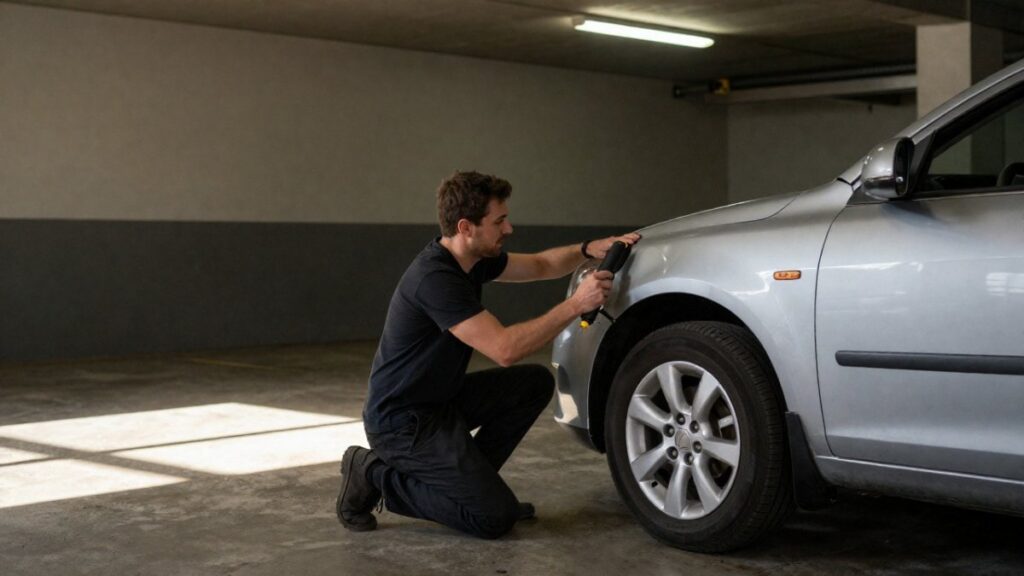
Yes, a mobile technician can usually perform a windscreen replacement in a Melbourne CBD basement car park. Access height, clearance around the bay, and building trade-work rules decide whether the job can go ahead on site.
- Allow at least 1.5 m of vertical clearance above the roof line.
- Keep roughly 1 m of clear floor beside the door for lifting and setting down glass.
- Ask building management in writing whether trade work is permitted.
- Check the entry height-limit bar, as it can rule out a mobile van.
- Confirm the drive-away time and that the car park stays open for it.
Table of Contents
- Can a Mobile Technician Replace a Windscreen in a CBD Basement?
- Checking Basement Access and Clearance Before You Book
- Underground Car Park Windscreen Replacement: What Happens on the Day
- Same-Day Mobile Windscreen Replacement for Busy CBD Workers
- Safe Drive-Away Time After Windscreen Replacement
- Insurance, ADAS Recalibration and Post-Installation Checks
- Booking Your Basement Windscreen Replacement in Melbourne
- Frequently Asked Questions
Can a Mobile Technician Replace a Windscreen in a CBD Basement?
Yes, in most cases a mobile technician can replace a windscreen in a Melbourne CBD basement car park.
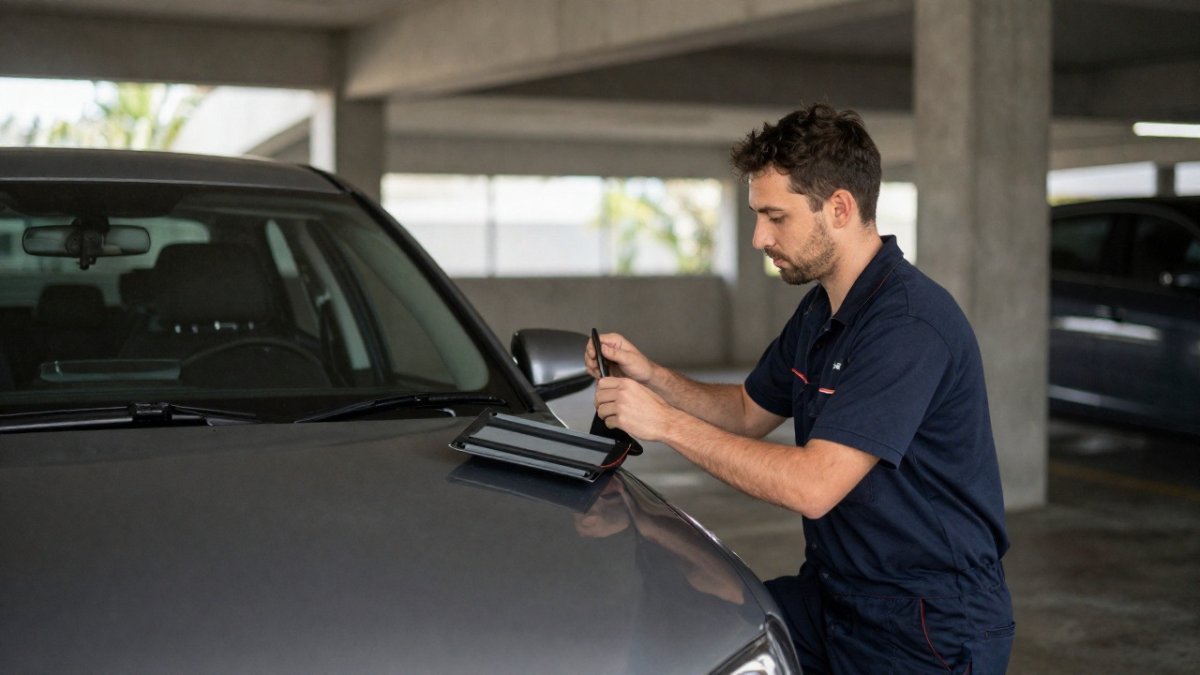
A replacement generally needs a flat working area beside the car, room to open the doors and a safe place to set down the new glass. A basement bay often provides this, but the surrounding structure can change the plan.
Basement parking is usually harder than street-level parking for three reasons:
- Limited headroom: The glass has to be lifted and positioned in a tight space.
- Poor lighting and ventilation: Good lighting is needed to fit the seal correctly, and the adhesive needs fresh conditions to cure.
- Building rules: Some car parks restrict trade vehicles or work during business hours.
Watch out: Do not assume the car can stay in a basement bay while the glass cures.
Checking Basement Access and Clearance Before You Book
Before you book, gather the details a technician needs to decide whether the job can be done where the car sits. Most basement jobs are feasible, but the difference between a smooth replacement and a wasted trip usually comes down to information you can collect in five minutes.
Measure the working envelope, not just the ceiling
A windscreen is lifted, rotated and set down beside the car, so the technician needs vertical clearance above the roof and horizontal clearance beside the bay. As a rule of thumb, allow at least 1.5 m of clear space above the roof line and roughly 1 m of clear floor beside the driver’s or passenger’s door. Measure from the floor to the lowest obstruction directly above the bay, pipework, ducting, sprinkler heads and cable trays often hang lower than the slab.
Record these figures:
- Ceiling height above the bay, floor to the lowest object overhead, not floor to slab.
- Bay dimensions, width and length, plus whether neighbouring bays are occupied.
- Door-swing clearance, room to open both front doors fully.
- Ramp and entry clearance, the height and width of the entry, any height-limit bar and the turning circle at the bottom of the ramp.
- Level and bay number, plus the nearest lift lobby, stairwell or column marker so the technician can find the car.
Confirm building-management approval
Many CBD buildings may treat windscreen replacement as trade work. Before the day, ask building management:
- Whether trade vehicles may enter the car park, and whether they must use a loading dock rather than the main entry.
- Whether the technician needs to sign in at reception, wear a visitor pass or be escorted.
- Whether work is restricted to certain hours, many buildings allow trade work outside peak tenant arrival and departure windows.
- Whether the bay can be reserved or coned off for the duration.
- What parking fees or access charges apply to the technician’s vehicle, and who pays them.
Get the approval in writing if you can, and note the name of the person who approved it. On the day, a printed or forwarded approval message saves time at the gate.
Share a single access brief
Send the technician one message containing the building address, car park entry point, clearance height at the entry, level, bay number, any gate or boom code, the sign-in procedure and your mobile number.
Watch out: A height-limit bar at the entry can rule out a mobile van even when the bay itself is roomy. Check the entry clearance before you confirm the booking, not when the technician is already at the gate.
Decide the fallback before the day
If the measurements show the bay is too tight, or building management will not approve trade work, plan the alternative in advance. Options include moving the car to a street-level loading zone or visitor bay for the appointment, or booking the job at a workshop.
Before booking, these are the access details a technician needs to check, with the figures from the article.
| Item | Value | Note |
|---|---|---|
| Vertical clearance above roof | At least 1.5 m | Measure to lowest obstruction, not slab |
| Clear floor beside door | Roughly 1 m | Room to lift and set down glass |
| Lowest overhead obstructions | Pipework, ducting, sprinklers, cable trays | Often hang lower than the slab |
| Trade work approval | Required in many CBD buildings | Ask building management in writing |
| Entry height-limit bar | Can rule out a mobile van | Check entry clearance before confirming |
| Access brief contents | Address, entry, level, bay, gate code, mobile | Send one message to technician |
Underground Car Park Windscreen Replacement: What Happens on the Day
On the day, the technician arrives, assesses the bay, protects the car and surrounding area, removes the old glass and fits the new windscreen. A straightforward replacement usually takes around an hour of working time, but a basement job adds assessment and access steps that can extend the visit.
The feasibility check on arrival
Before any tools come out, the technician walks the bay and confirms four things:
- Headroom and swing room, enough clear space above the roof and beside the doors to lift, rotate and set down the glass without touching structure or stored items.
- A stable, level surface, the car should be on flat ground with the handbrake set and, where possible, wheels chocked. Sloping ramps and tight turning areas make the job unsafe.
- Lighting and ventilation, the technician will usually bring a work light. Adhesive needs reasonable airflow to cure, so enclosed, unventilated corners may need a fan or a door left open.
- Building permission, confirmation that trade work is allowed and that the technician has signed in or been escorted as required.
If any of these fail, the technician should explain the problem before starting and offer the alternative.
Preparing the car and the space
The technician covers the dashboard, paintwork and bonnet, and clears the area around the bay so glass can be handled safely. The old windscreen is cut out, the frame is cleaned and primed, and the new glass is fitted with fresh urethane adhesive and checked for an even seal. Protective tape is usually left in place until the adhesive has set.
When the vehicle must be moved to street level or a workshop
A move is triggered by a specific, identifiable problem rather than a vague judgement. Common triggers include:
- Entry or bay clearance below what the van and glass need.
- A ramp or turn the van cannot negotiate safely.
- Building management refusing trade access, or restricting hours beyond the appointment window.
- No safe place to set the glass down, or a bay that cannot be isolated from passing traffic.
- A car park that closes before the adhesive has cured, meaning the car cannot stay put for the required period.
When a move is needed, the technician should explain the reason and the alternative before any work starts. Ask who arranges the move, whether the car can be driven short distances with the old glass in place, and what the cost and timing will be.
Watch out: Do not let a car with a cracked or displaced windscreen be driven out of a basement just to reach a street-level bay.
Vehicle-ready time and the car park’s closing hours
After installation, the car must stay still for the adhesive’s cure period. Confirm two things before the technician leaves: the drive-away time for the adhesive used, and whether the car park will still be open and accessible when that time expires. If the car park locks overnight, either book an early appointment so the cure finishes before closing, or plan to move the car to a street-level bay or secure location for the cure period.
Same-Day Mobile Windscreen Replacement for Busy CBD Workers
Same-day mobile windscreen replacement lets you keep working while your car is fixed where it is parked. For office workers in the CBD, this often means the job is done during a lunch break or before the end of the day.
To make a same-day booking work well:
- Call early in the morning. Availability is usually better before the day fills up.
- Have your bay details ready. Level, bay number and access notes speed up the job.
- Confirm the building’s trade-work rules in advance. This avoids delays on arrival.
Check with Mobile Auto Glass Melbourne for current availability and contact details on its website.
Safe Drive-Away Time After Windscreen Replacement
The drive-away time is the period the car should stay parked after a new windscreen is fitted.
The correct time depends on the adhesive used, the weather and the vehicle. The technician will give you a specific time for your car. Follow it, even if the car looks fine.
Keep these points in mind:
- Do not slam the doors for the first few hours.
- Avoid car washes and high-pressure cleaning until the technician says it is safe.
- Leave the protective tape in place until the technician removes it.
Watch out: Ignoring the drive-away time can cause leaks, wind noise or a weak seal. If you notice any of these after driving, call the technician straight away.
Insurance, ADAS Recalibration and Post-Installation Checks
Many newer cars have driver-assist cameras mounted near the windscreen, such as lane-keeping and automatic emergency braking systems.
Recalibration may be done with a static or dynamic procedure, depending on the vehicle.
Insurance is another common question. Many policies cover windscreen replacement, but the excess, the claim process and whether you must use a particular repairer vary.
After the job, check the windscreen for leaks, wind noise or a loose seal over the next few days. Report any problems to the technician promptly.
Booking Your Basement Windscreen Replacement in Melbourne
When you book, give the technician the details they need to plan the job correctly. Include the vehicle make and model, the building address, the level and bay number, and any access notes.
Mobile Auto Glass Melbourne offers mobile windscreen repair and replacement across Melbourne, including sunroofs and quarter glass. If you are unsure whether a chip can be fixed on site, read a guide to mobile chip repair options in Geelong. You can book a mobile windscreen replacement for same-day service, or check our contact details to speak directly with an operator about your basement car park.
If you have questions about insurance or recalibration, read the frequently asked questions before you call.
Last Updated: November 21, 2026
Frequently Asked Questions
Can a mobile technician replace a windscreen in an underground car park?
Usually yes, provided the technician can drive a service vehicle or reach the bay with tools, glass and adhesive. Basement access depends on ramp height, clearance and whether the building allows trade vehicles below ground. If the bay is unsuitable, the car may need to be moved to street level or a workshop before the job starts.
What access details should I give when booking a basement windscreen replacement?
Give the building address, the car park level and bay number, and any entry height or gate restrictions. Note whether you need a swipe card or security sign-in, and whether the car park has a ramp or lift. Confirm the vehicle make, model and year so the correct glass is brought. Clear details at booking reduce the risk of a wasted trip or a delayed start.
Can I drive my car straight after a windscreen replacement?
Drive-away time depends on the adhesive used and the conditions at fitting, so ask the technician for the specific time for your vehicle. Avoid slamming doors and car washes during the initial curing period. Some vehicles need an ADAS camera recalibration before they are safe to drive normally. Your technician should confirm these steps before you leave.
How long does a mobile windscreen replacement usually take?
Most replacements take a standard working session on site, with the adhesive curing period added before the car is safe to drive. Vehicles with rain sensors, heads-up displays or cameras may need extra time for setup or recalibration. Basement jobs can take slightly longer because of tight bays and access logistics. Your technician can give a time estimate once the vehicle details are known.

